

Improve Water Penetration Through Compacted Soil With APSA-80™
Help Irrigation Water Reach Deeper Into the Soil Profile
Compacted, crusted, and hard-to-wet soil can prevent irrigation water from moving evenly into the root zone. APSA-80™ helps applied water spread across soil particles and penetrate difficult-to-wet areas more effectively.
Quick Answer
Compacted, crusted, and hard-to-wet soil can prevent irrigation water from moving evenly into the root zone. Water may collect near the surface, run off, evaporate, or leave inconsistent wet and dry areas across the field.
APSA-80™ is a concentrated nonionic wetting agent designed to reduce the surface tension of water. This helps applied water spread across soil particles and penetrate compacted or difficult-to-wet soil more effectively.
By helping more irrigation water reach the active root zone, APSA-80 may allow growers to receive greater value from the water, energy, labor, and equipment they are already paying for.
Key takeaway: APSA-80™ helps make the water you are already pumping and applying work more effectively—reaching deeper into the soil profile instead of pooling, running off, or evaporating at the surface.
Is Soil Compaction Wasting Your Irrigation Water?
Soil compaction reduces pore space and restricts the pathways water normally uses to move through the soil. Even when enough water is applied, it may not penetrate beyond the compacted level efficiently.
This can lead to:

When water cannot move through the soil effectively, growers may pay to pump and apply water that never reaches the portion of the root zone where it can provide the greatest value.
How APSA-80 Helps Water Move Through Compacted Soil
APSA-80 reduces the surface tension of applied water. This improves the water's ability to wet soil particles, spread through available pore spaces, and penetrate difficult or compacted areas of the treated soil profile.
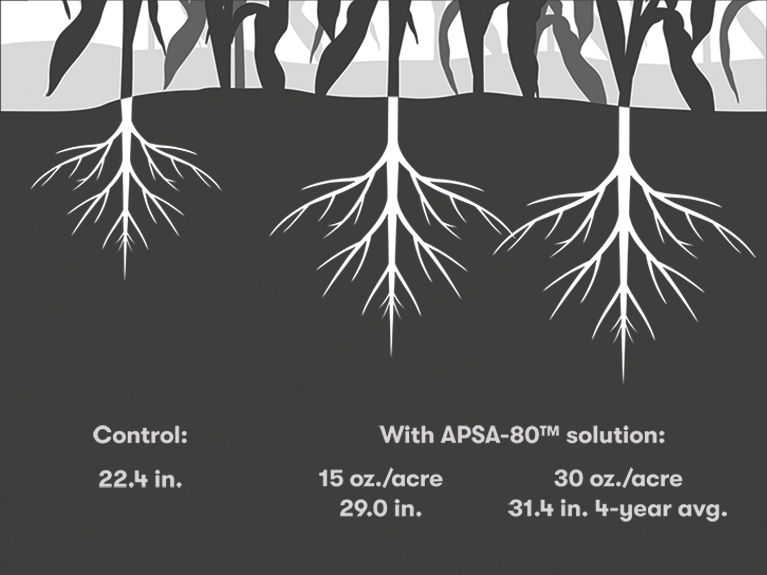
This demonstration reported an average root depth of 22.4 inches for the untreated control, compared with 29.0 inches using APSA-80 at 15 ounces per acre and 31.4 inches at 30 ounces per acre. Results will vary according to soil, crop, irrigation, weather, and management conditions.
Depending on field conditions, APSA-80 may help:
An Important Clarification
APSA-80 does not physically loosen soil or eliminate mechanical compaction. It does not replace tillage, aeration, drainage improvements, or other soil-management practices. Its role is to improve how water wets and moves through the soil—including conditions where compaction makes penetration more difficult.
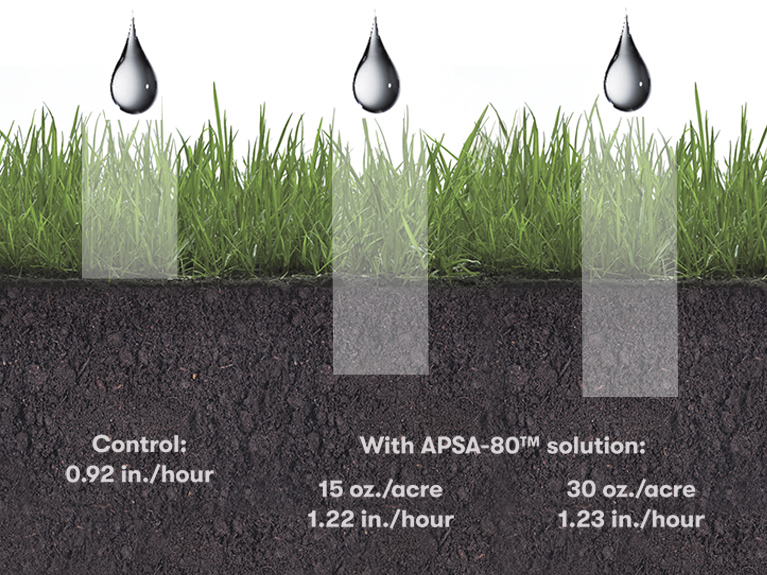
This demonstration compared untreated soil with soil treated using APSA-80. The reported water-penetration rate was 0.92 inch per hour for the untreated control and 1.22–1.23 inches per hour for the APSA-80 treatments. Results reflect the specific demonstration conditions and are not a guarantee of performance.
Save Money by Getting More Value From Applied Water
Better Penetration May Mean Less Wasted Water
The amount of water pumped is only part of the irrigation equation. What ultimately matters is how much of that water reaches the active root zone and becomes available to the crop.
When APSA-80 helps water penetrate compacted or hard-to-wet soil more effectively, growers may be able to reduce water-related losses caused by:
Better infiltration and moisture distribution may help growers obtain the desired root-zone wetting with less wasted water. This can potentially reduce water, pumping, energy, and irrigation-labor costs.
Actual water savings must be measured under field-specific conditions. Results will depend on soil type, compaction severity, irrigation system, weather, crop, application rate, and management practices.
What Improved Water Efficiency Could Save
The potential financial return may come from several areas:
| Source of Value | Potential Benefit |
|---|---|
| Reduced runoff | More applied water remains in the intended area |
| Better penetration | More water reaches deeper portions of the soil profile |
| More uniform wetting | Fewer dry areas may require additional irrigation |
| Reduced ponding | Less water remains exposed at the surface |
| Shorter irrigation time | Potential savings in pumping and labor |
| Lower energy use | Reduced electricity or fuel expense |
| Improved root-zone moisture | More value from every irrigation cycle |
Calculate Potential Water Savings
A simple field calculation can help estimate the possible financial value of improved water efficiency:
Water-cost savings = measured water reduction × cost per unit of water
Energy savings = reduced pumping time × energy cost per hour
Estimated net value = water savings + energy and labor savings − APSA-80 cost
The calculation should use documented field measurements rather than assumed savings.
Enter Your Field Measurements
Water Cost Savings
$0.00
Total Savings
$0.00
Net Value
$0.00
Return per $1 Spent
0.00×
This calculator is for estimation purposes only. Results must be documented under field-specific conditions and are not guaranteed.
Help Water Reach a Deeper Root Zone
Crops can only use water that reaches their active roots. When water remains near the surface or above a compacted layer, roots may stay shallow and become more vulnerable to heat and moisture stress.
By improving wetting and helping water move more effectively through treated soil, APSA-80 may support conditions that encourage deeper and more extensive root development.
A stronger root system may help crops:
- Access moisture from a larger soil volume
- Use water stored deeper in the soil profile
- Remain more resilient between irrigation cycles
- Explore more soil for available nutrients
- Maintain more consistent growth during challenging conditions
APSA-80 is not a rooting hormone or fertilizer. Any improvement in root development would be associated with better soil wetting and water availability.

APSA-80® for Spray Applications
In addition to improving water movement through soil, APSA-80® serves as a concentrated nonionic surfactant for spray applications. It helps lower the surface tension of spray solutions so they spread more uniformly across plant surfaces.
Herbicide Support
Helps post-emergent herbicides make more complete contact with target weeds.
Insecticide & Fungicide Coverage
Promotes more uniform coverage on waxy leaf surfaces.
Irrigation Enhancement
Improves water penetration through compacted or hard-to-wet soil.
Turf & Golf Course Use
Approved for use on commercial turf, sod farms, and golf courses.
Important Product Information
APSA-80® is:
- An all-purpose spray adjuvant concentrate
- A nonionic surfactant and wetting agent
- Formulated with 80% active ingredients
- Biodegradable
- Noncorrosive to equipment
- Available in 2.5-gallon and 30-gallon containers
- Approved for turf and agricultural use
APSA-80® is not:
- A pesticide or fertilizer
- A physical soil loosener or aerator
- A replacement for tillage or drainage work
- Intended for aquatic use
- A rooting hormone or growth regulator
How to Mix APSA-80®
- 1Read every product label before mixing.
- 2Add water to the spray tank or irrigation system.
- 3Turn on the agitator or recirculation pump.
- 4Add the appropriate amount of APSA-80®.
- 5Allow APSA-80® to disperse thoroughly.
- 6If combining with other products, add them according to manufacturer instructions.
- 7Maintain proper agitation during mixing and application.
A compatibility or jar test is recommended when combining products for the first time.
Verified Customer Reviews & Real Field Results
Multi-Year Research & Field Performance
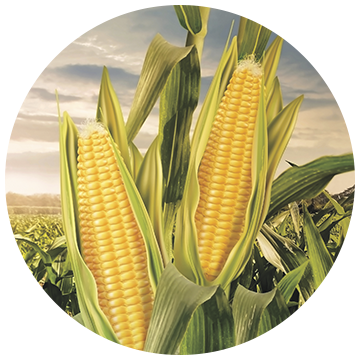 Corn Yield Impact+17.6 bu/acre
Multi-year Irrigation Research Foundation (IRF) study average.
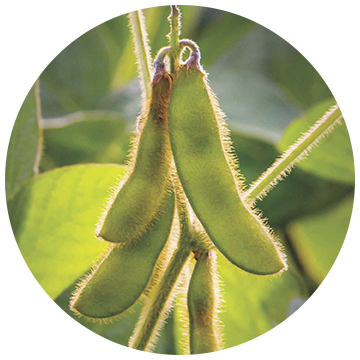 Soybean Yield Impact+5.1 bu/acre
Multi-year Irrigation Research Foundation study average.
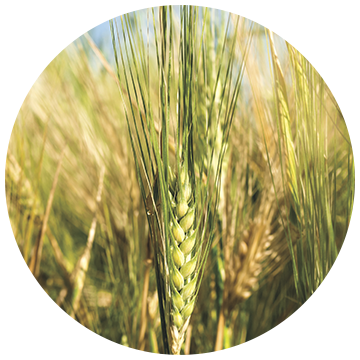 Winter Wheat Yield Impact+7.0 bu/acre
Multi-year Irrigation Research Foundation study average.
Bermuda Grass & Turf Management Studies
Golf courses and sod farms utilize APSA-80® as a spray adjuvant to improve herbicide wetting and penetration, significantly increasing herbicide efficacy on tough waxy weeds like Bermuda grass.
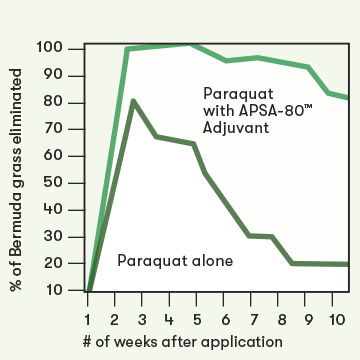
Paraquat + APSA-80® Efficacy

Golf Green Turf Recovery
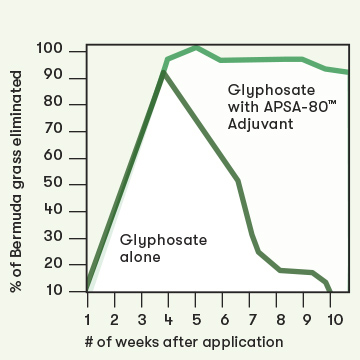
Glyphosate + APSA-80® Efficacy
Real Reviews From Growers & Property Managers
APSA 80 is by far the best wetting agent
"APSA 80 is by far the best wetting agent, soil conditioner on the market today by far! For the price, it's too good to be true!"
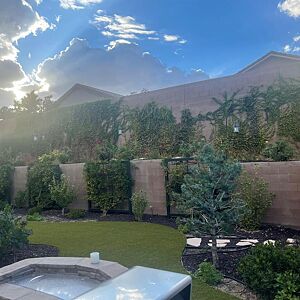
Great Success on Dry Dirt Spots
"Just moved into a new house and past owners had a bunch of dry dirt spots where grass wasn't growing. Used this on my yard, not only has it made the ground softer so water can penetrate deeper to allow growth, it actually started making our plants produce more fruit!"
The best from my experience
"I have tried many other products but APSA-80 does exactly what they said it would do and more."
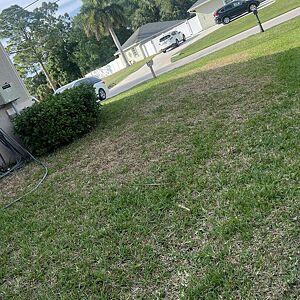
Septic Tank & Clay Soil Maintenance
"Live in central NC where clay soil doesn't absorb well. A cup of APSA monthly keeps the septic leach field functioning without fail and helps water soak through heavy clay."
Super Green Leaves & Heat Recovery
"I purchased this last summer & used it on several of my front yard trees of which one had suffered from frost bite and extremely hot summer heat. Now the leaves are out in abundance and very green on the branches!"
Understated fantastic results!
"Have been using this product for over a month. The results are stunning. Water penetrates deeper and moisture lasts much longer."
Frequently Asked Questions
Is APSA-80® a fertilizer?
No. APSA-80® is not a fertilizer or plant food. It is a nonionic surfactant and wetting agent designed to improve how water moves through soil and spreads on plant surfaces.
Is APSA-80® a pesticide?
No. APSA-80® does not replace an herbicide, insecticide, or fungicide. It is added to compatible spray solutions or irrigation water to support their application and performance.
What does "nonionic surfactant" mean?
A nonionic surfactant helps lower the surface tension of water without carrying an electrical charge. This allows water to spread more effectively across soil particles and waxy plant surfaces.
Does APSA-80® physically loosen compacted soil?
No. APSA-80® does not physically loosen soil or eliminate mechanical compaction. It does not replace tillage, aeration, drainage improvements, or other soil-management practices. Its role is to improve how water wets and moves through the soil—including conditions where compaction makes penetration more difficult.
Can APSA-80® be used with any herbicide?
Not automatically. Read the herbicide label first. Only use APSA-80® when the pesticide label allows or calls for an appropriate nonionic surfactant or spray adjuvant.
How much APSA-80® should I use for soil/water applications?
Rates vary by application type. The specimen label lists rates for different uses including irrigation, herbicide programs, insecticides, and fungicides. Always follow the current product label and applicable regulations.
Can APSA-80® be used on turf and golf courses?
Yes. The specimen label identifies turf and golf courses as approved use areas. Follow the current label and confirm the appropriate application program for the intended treatment.
Will APSA-80® increase crop yield?
APSA-80® is designed to improve water penetration, wetting, spreading, and coverage. Crop performance and yield depend on many factors, and results are not guaranteed.
How does APSA-80® help with irrigation efficiency?
By reducing the surface tension of water, APSA-80® can help water penetrate compacted soil more effectively, reduce runoff and ponding, improve moisture distribution within the soil profile, and help applied water reach deeper portions of the root zone.
Is APSA-80® safe for spray equipment?
The product is labeled as noncorrosive to equipment and can help disperse powders and reduce clogged nozzles. All equipment should still be cleaned according to the manufacturer's instructions.
Can APSA-80® be used in ponds or other bodies of water?
No. The specimen label states that APSA-80® is not for aquatic use.
What return can APSA-80® provide?
The return from APSA-80® can come from additional crop yield, more value from spray applications, potential water-management savings, reduced pumping costs, and improved irrigation efficiency. Actual results depend on field conditions.
Do the research results guarantee my farm's performance?
No. Research results are historical examples from specific trials. They should not be presented as guaranteed results. Always consult the manufacturer and a qualified agronomist before developing an application program.
Is Compacted Soil Preventing Your Irrigation Water From Reaching the Root Zone?
Find out what APSA-80 could cost per acre and how a side-by-side field demonstration could measure its effect on water penetration in your operation.
Your field assessment can consider:
Product Disclaimer & Manufacturer Consultation
Always read and follow the current APSA-80® product label and the labels of all herbicides, insecticides, fungicides, or other products used in combination. Product availability, permitted uses, application rates, and regulations may vary by state. Conduct a compatibility test before combining products for the first time. Results depend on application practices and field conditions and are not guaranteed.
Research and field-trial results are historical examples from specific trials and should not be presented as guaranteed results. Water-penetration rates, root-depth measurements, and yield data reflect specific demonstration or trial conditions and will vary according to soil type, crop, irrigation method, weather, and management practices. Always consult the manufacturer and a qualified agronomist, crop adviser, or applicable agricultural authority before developing an application program for your operation.